Beyond Carbon
America’s family forests can provide millions in direct benefits and cost savings to businesses and communities. From watersheds to communities, America has much more than carbon benefits to gain from FFCP-managed forests.
The American Forest Foundation and the Sorenson Impact Institute have been investigating the additional nature-based benefits family-owned forests can provide. Our new report sheds light on how businesses, communities, and ecosystems all stand to gain from forests managed through our Family Forest Carbon Program.
AFF’s Family Forest Carbon Program has been making incredible strides toward creating direct channels of benefit between family forest owners and companies, but a deeper understanding of the nature-based infrastructure and co-benefits of FFCP forests is long overdue. To fill this knowledge gap, AFF has teamed up with the Sorenson Impact Institute to quantify the potential of FFCP-managed forests beyond carbon. The report highlights the many benefits of the Family Forest Carbon Program, including how it provides:
- An estimated $6.4 million in healthcare savings per year along with many other health benefits.
- $2.3 million in regional economic output annually, including direct landowner payments and the creation of forestry jobs.
- And 91% of FFCP properties are of high importance to surface drinking water, making protecting these forests vital to securing nearby water supplies.
Nature-Based Co-Benefits: A More Holistic Picture
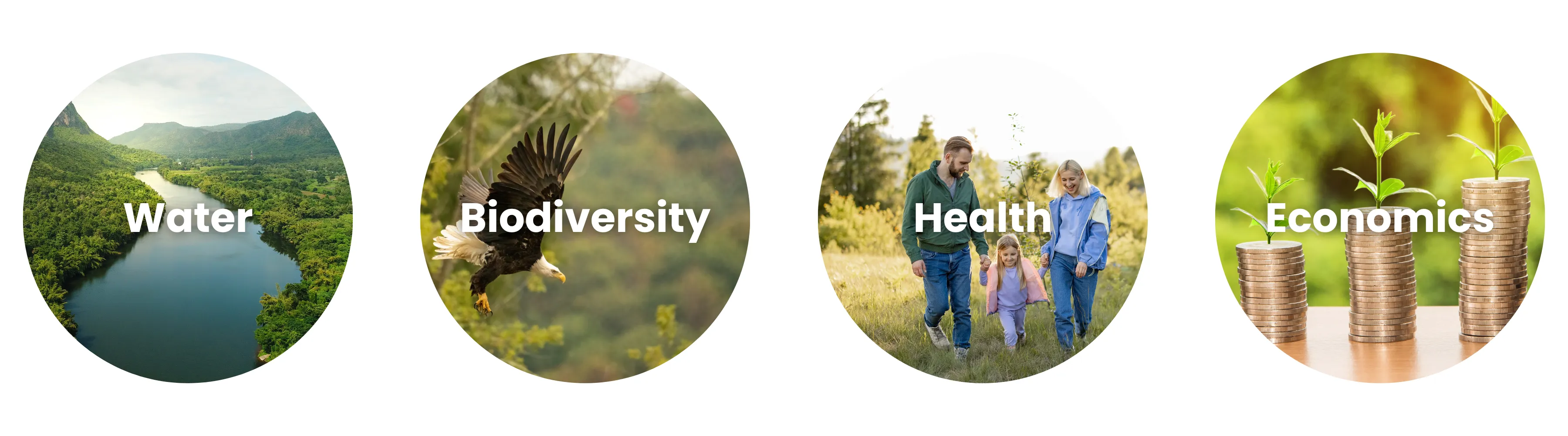
Nature-based infrastructure like forests provide businesses and communities with innumerable natural benefits. Well-maintained forests filter and regulate water flows, mitigate natural disasters and local temperatures, act as high quality habitat for countless species, and provide health and economic benefits to nearby communities. These benefits are inherent to forests, and largely the tree species that grow in them, but healthy functioning forests often require active management to optimize these benefits alongside carbon sequestration and climate mitigation.
While the carbon credit market is currently the most well-developed of the ecosystem service markets, water and biodiversity credit markets are not too far behind. The Family Forest Carbon Program is well-positioned to provide competitive stacking benefits to landowners, communities, and businesses alike, with the value of these benefits in FFCP forests potentially providing billions of dollars of value beyond carbon credits alone.