Fighting Forest Invasives For A Healthier Future
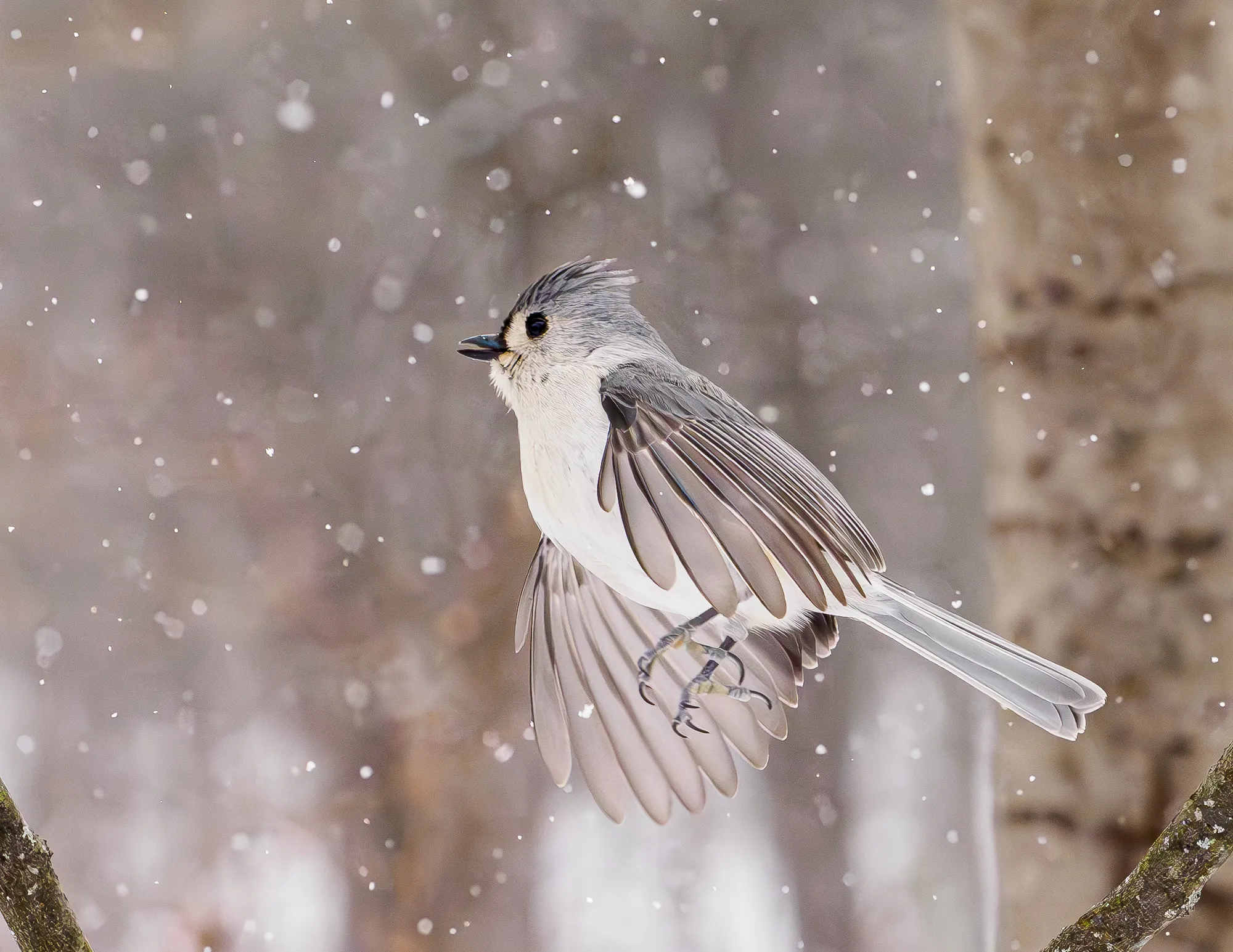
The Jacksons enjoy photographing the wildlife on their property. Captured here is a Tufted Titmouse, which benefits from forest management like leaving deadwood.
Laura and Mike Jackson were among the first-ever landowners to enroll in the Family Forest Carbon Program (FFCP). As one of the 78 members of FFCP’s first cohort, they launched the program to become a current network of over 1,400 landowners stewarding over 200,000 acres of land across the Eastern United States. The Jacksons shared how the program has helped their forest goals these past 6 years.
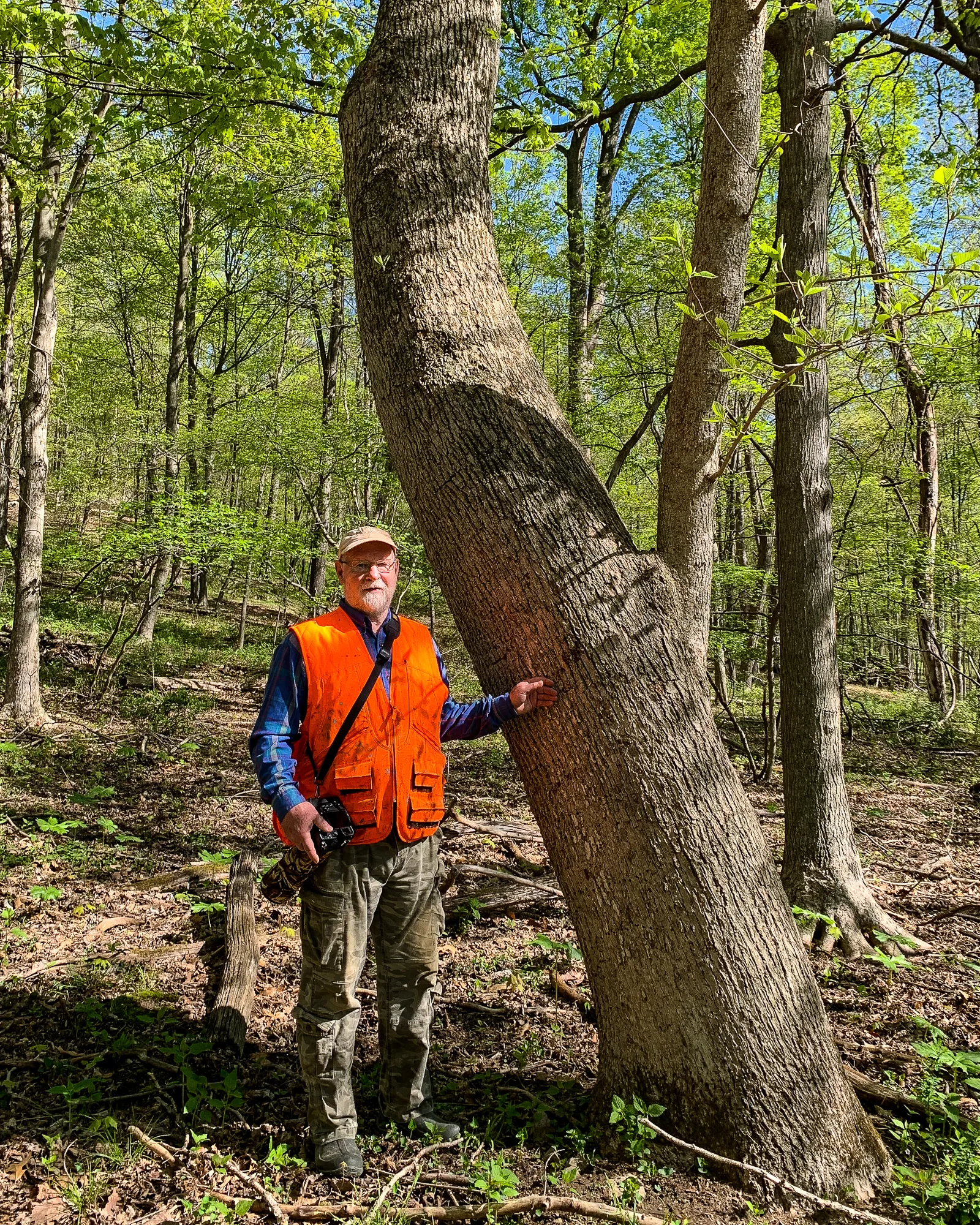
Mike stands with one of the American Basswoods located on the property, greatly treasured by the couple.
The Jacksons live on their 120-acre property outside of Everett, Pennsylvania. When they acquired the property, it was a wildlife oasis filled with bobcats, deer, and birds. The pair became amateur nature photographers, and Mike took up hunting. However, the property had its issues. Their forest had been high graded twice prior to their ownership, and a spongy moth epidemic had further damaged the trees that remained.
The once healthy forest became a challenge to manage since invasive species of non-native shrubs and vines began to take over, including Japanese vine honeysuckle, Japanese barberry, Oriental bittersweet. mile-a-minute, multiflora rose, and wineberry.
Working with an FFCP forester and having a new management plan made them more intentional and confident stewards of their property. Their forester helped them understand what was within their woods, including stand condition, species mix, and any stressors. Together, they were able to identify practical ways to prioritize their forest’s long-term health, improve wildlife habitat, and create a roadmap to managing the land.
“Having informed, long-term stewardship, with clear records and continuity for our land over time is a positive outcome for us as landowners and for our heirs,” Laura shared.
Since beginning the program in 2021, the Jacksons have been systematically working on removing invasive species so they can manage them on a rotational basis in different stands on their property. They’ve documented better native tree regeneration, including more oak regeneration, and now have fewer deer due to chronic wasting diseases.
Their yearly FFCP payments help cover a portion of the cost for herbicides, spray equipment, and hiring professional applicators.
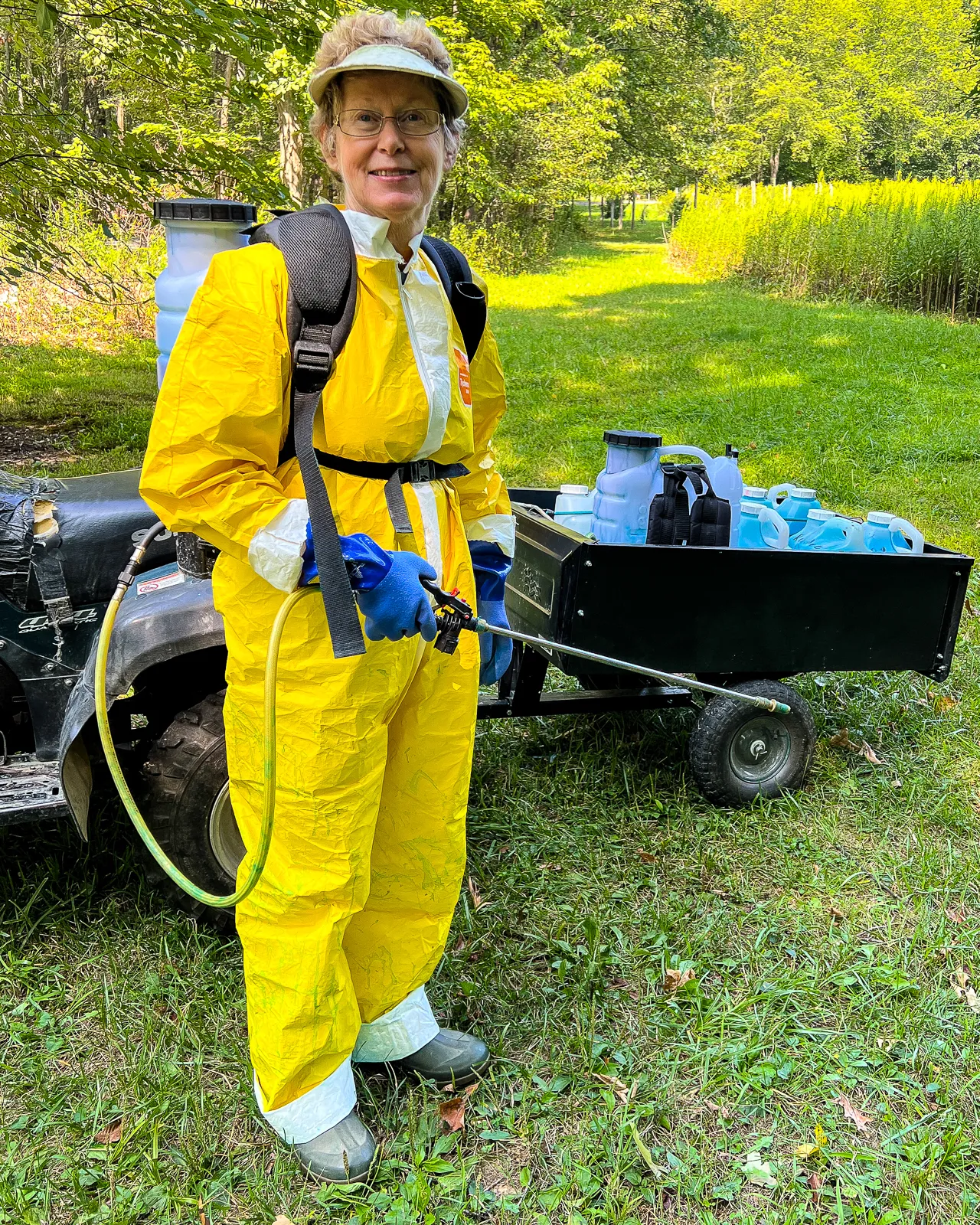
Laura Jackson gets suited up to spray for invasive species.
They have also made an effort to plant more native species, like witch hazel, which benefits insects like inter-flying moths, small flies, and native bees. To provide food for birds like Cedar Waxwings, they have planted serviceberries, white-flowering dogwood, hawthorn, crabapple, and winterberry holly. The Cedar Waxwings also enjoy the native black haw berries on their property, which provide food for pileated woodpeckers, too. They began seeing spotted slimy salamanders on their property, an excellent indicator of forest health.

A Cedar Waxwing snacks on some of the Jackson’s black haw berries.
When asked what they would say to landowners considering joining the program, they advised them to read the contract carefully and ask questions about the parameters, including harvesting, trails, hunting, selling or transferring the land, and monitoring for possible natural disturbances. Overall, they believe it is a good fit if you want to keep your woods as woods, and you’re willing to make a long-term commitment to thoughtful stewardship.
“If the requirements match your goals, the program can be a straightforward way to get support for managing a mature forest for the future.”
The Jacksons’ property is certified in the American Tree Farm System and has been in a conservation easement with Western Pennsylvania Conservancy since 2010, so it cannot be subdivided or developed, and they have willed their property to their niece and her family. Thanks to their thoughtful stewardship and preparation, their forest will continue to provide a healthy environment for decades to come.
Related Articles
May 13, 2026
Looking Back at Bear Town
FFCP caught up with Susan Benedict, our third-ever-enrolled landowner, to reflect on her six years with the program and what she is looking forward to in the future.
May 6, 2026
Family Forest Carbon Program Enrolls 200,000 Acres
Today, the American Forest Foundation’s (AFF) Family Forest Carbon Program (FFCP) reached 200,000 total acres enrolled, a major milestone in its efforts to support family landowners, bolster rural economies, and deliver meaningful conservation impact.
April 7, 2026
The Family Protecting the Poconos
The DeSeve family owns 100 acres of forestland nestled in the Pocono mountains, halfway between Philadelphia and New York. After joining the Family Forest Carbon Program and with the help of their forester, they are exploring ways to protect their trees, raise new trees, grow mushrooms for biodiversity, protect wildlife, and improve water quality.