From Wildfire Fuel to Climate Solution: Turning Forest Biomass into Biochar
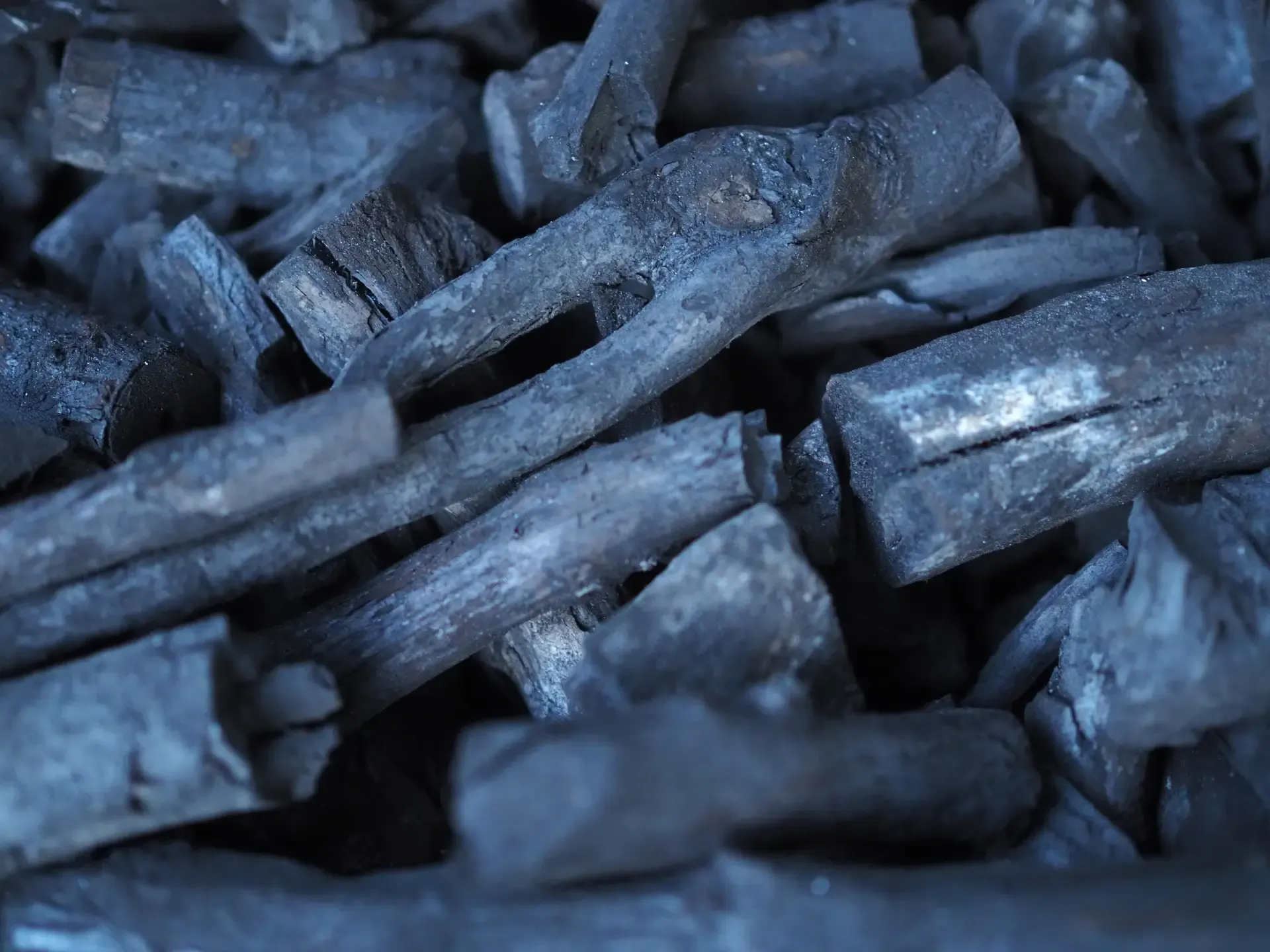
Across the West, family forest owners and communities face a steep challenge: decades of fire suppression have left forests crowded with small trees, brush, and fine fuels. These fine fuels ignite easily and allow wildfires to spread rapidly. Managing these risks requires removing dense fuel loads. But that raises a critical question:
What do we do with all that plant material once it has been removed?
Over the past two years, the American Forest Foundation (AFF), working with partners at CHARR (Carbon Harmonization and Accounting for Reduction and Removals), has been exploring a promising answer: convert removed forest vegetation into biochar. Through field pilots in California in 2025 and 2026, AFF and CHARR moved from testing low-tech approaches to incorporating conservation burning into larger wildfire resilience efforts. The results demonstrate how biochar production can become a practical tool for building healthier, more fire-resilient forests.
A Different Kind of Burn Pile
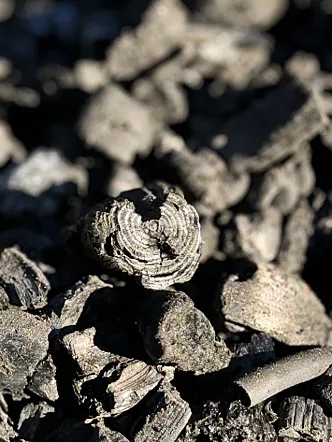
Biochar produced through conservation burning retains carbon from woody material in a stable form that can be returned to the landscape.
A conservation burn looks similar to a traditional burn pile, but with a critical difference. Rather than allowing the pile to burn completely to ash, crews manage a hot, clean burn and quench it with water once the material reaches the glowing-coal stage.
What remains is biochar: a carbon-rich material that can be returned directly to the forest floor as a soil amendment. Converting biomass into biochar locks a significant portion of carbon into a stable form that remains safely in the soil for centuries, rather than releasing it back into the atmosphere through decay or severe wildfire. Conservation burning also reduces risks associated with other kinds of proactive burning. Conservation piles can be quenched in roughly 30 minutes, whereas traditional piles often smolder for hours or days.
Quenching limits smoke and prevents "creep", where smoldering fire spreads underground or through surrounding fuels. This shorter, controlled burn period provides an important safety benefit for landowners and nearby communities. Post-burn benefits continue on the land. Biochar’s porous structure helps soils retain water and nutrients while supporting beneficial microbial life. Returned to treated areas, it can also reduce runoff and erosion, a benefit observed directly during field trials.
Crucially, this carbon removal process does not rely on growing new biomass. It finds a higher use for fuels that already exist and must be managed to mitigate wildfire risk.
2025: Testing the Idea in the Field
In 2025, AFF and CHARR began testing low-tech biochar production in California’s Sierra Nevada foothills. One primary testing site was Foothill Horizons, a 143-acre outdoor education property operated by the Stanislaus County Office of Education.
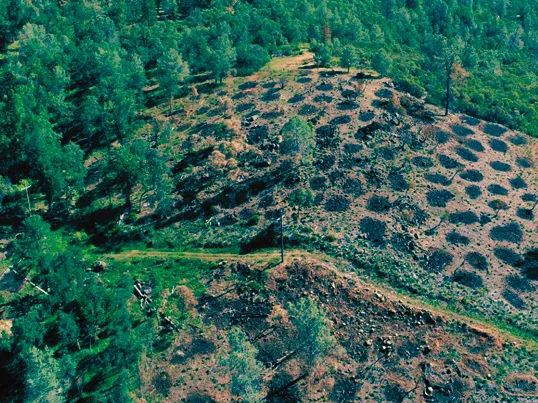
Like many property owners...
their landscape faced decades of accumulated vegetation. Jessica Hewitt, Director of Foothill Horizons, noted that support from AFF and partners accelerated forest restoration that otherwise would have taken decades using internal resources alone.
These trials tested...
conservation burn piles alongside portable flame-cap kilns and larger, machine-built piles to process higher volumes. The research demonstrated that these accessible methods yield high-quality biochar while generating greenhouse gas emissions substantially lower than conventional pile burning.
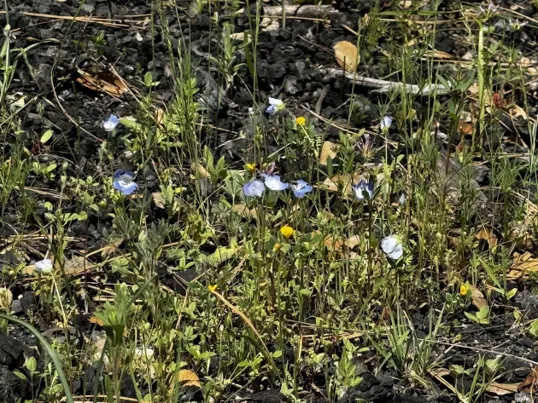
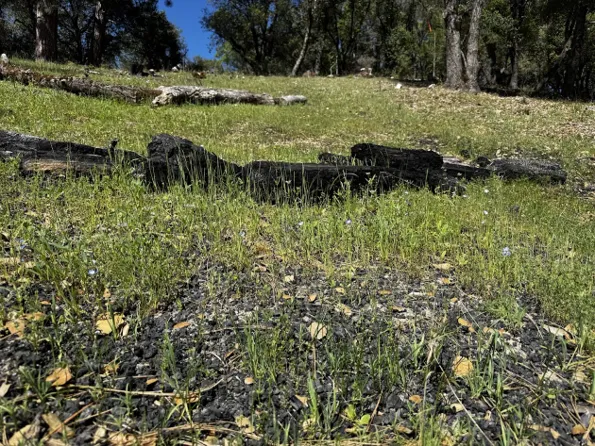
Where biochar was returned to the soil...
erosion decreased, and treated areas became fertile beds for native wildflowers. Emerging blooms offered a visible example of how wildfire fuel could restore plant communities. Neighbors took notice, subsequently organizing treatments on their own properties to reduce collective community risk.
2026: Putting Lessons to Work
In 2026, AFF and CHARR incorporated conservation burning into a larger wildfire resilience project supported by PG&E in the Sierra Nevada foothills. Across a 22-acre project area, crews removed dense vegetation presenting fire risks around utility infrastructure. Applying protocols refined in 2025, material across roughly 10 acres was converted into biochar, yielding nearly seven tons of stable material.
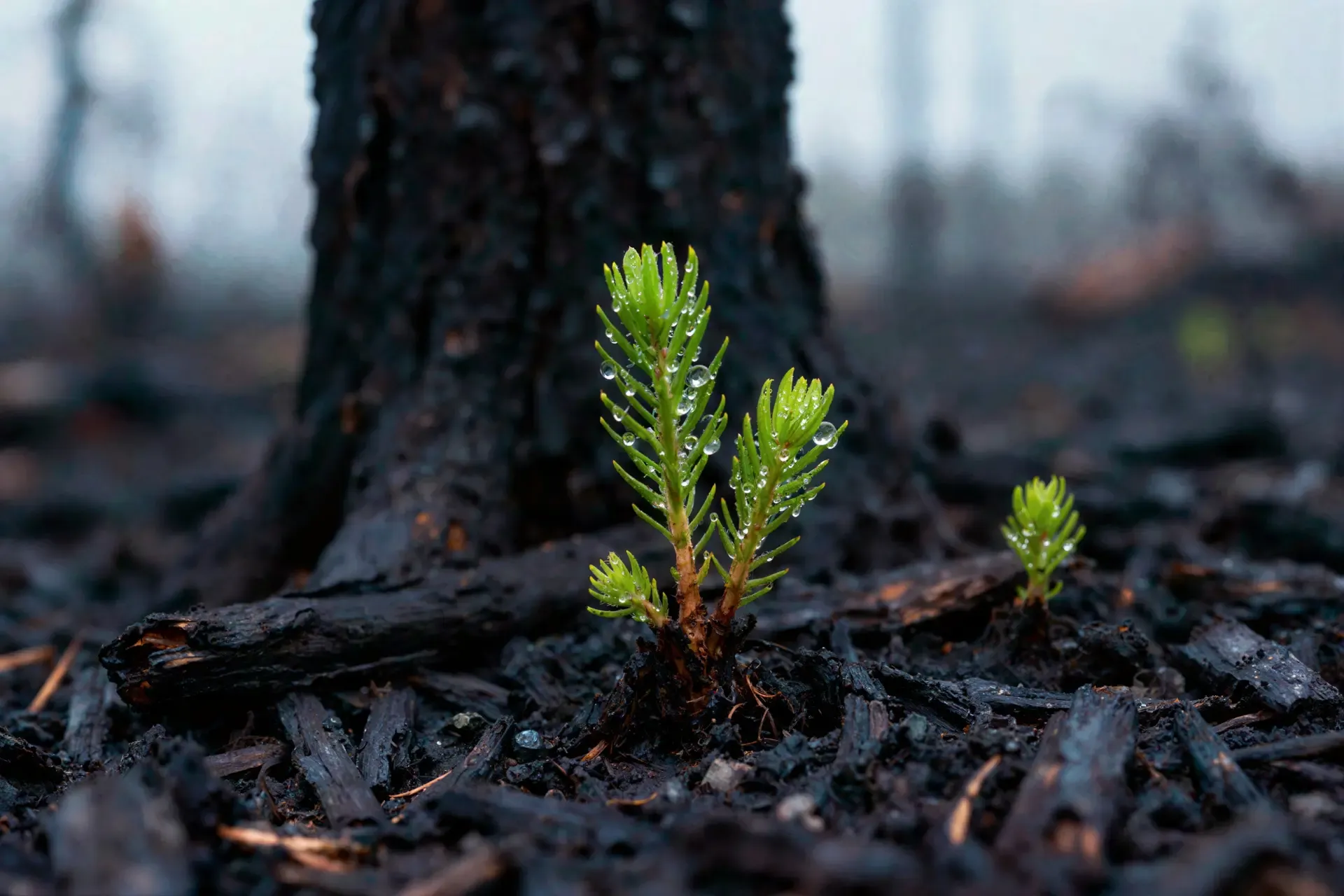
Biochar is a powerful soil amendment, helping soils retain moisture while supporting soil microbes in reestablishing healthy soils and regrowing plant communities.
A notable success, the project involved processing dense stands of manzanita: a fire-prone shrub common to California’s chaparral ecosystems and wildland-urban interfaces. While manzanita creates heavy fine-fuel loads that are costly to manage, the pilot proved it serves as an excellent feedstock for biochar. The 2026 pilot also confirmed that field crews could quickly learn and integrate conservation burning into active operations.
Creating Maintainable Forests
Converting fuels into biochar carries a higher upfront cost than conventional methods like mastication. However, mastication primarily rearranges fuels by breaking brush into smaller pieces that remain on the ground. Conservation burning actually removes that fuel load from the ecosystem, significantly mitigating fire risk. That distinction matters over time.
Conventional treatments often require frequent repetition as vegetation regenerates over remaining debris. By removing accumulated fuels, conservation burning helps transition lands sooner toward lower-cost maintenance tools, such as prescribed fire and targeted grazing. An initial investment in conservation burning creates a pathway from expensive fuels reduction to routine, affordable stewardship. The ultimate goal is to help landowners maintain resilient forest conditions safely over the long term.
From Pilots to Scale
Conservation burning is not a universal solution; effective wildfire resilience requires a comprehensive toolbox including thinning, mastication, chipping, prescribed fire, and grazing.
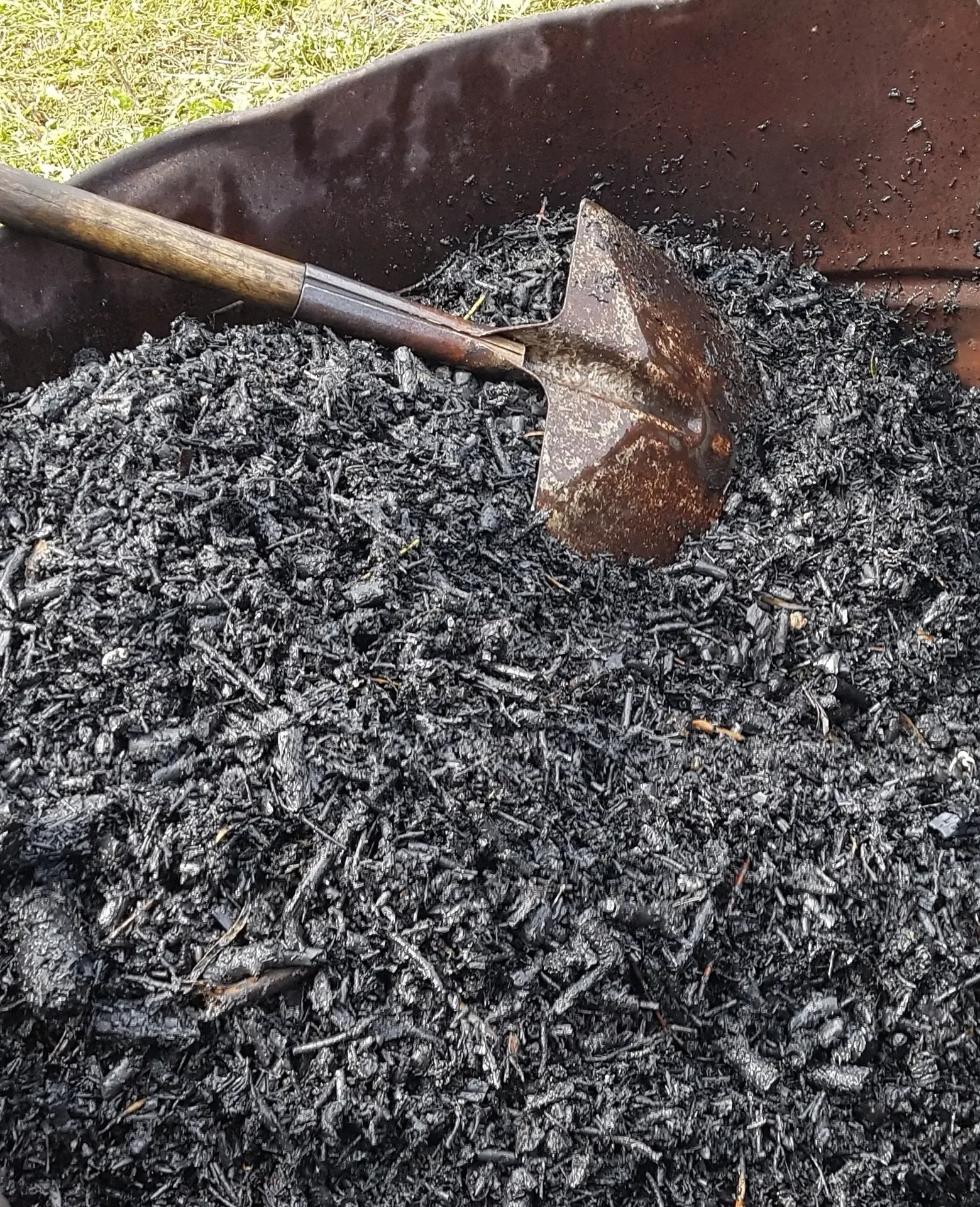
By training field crews to incorporate conservation burning into wildfire prevention and forest restoration practices at scale, we can create a win-win for fire and climate mitigation.
However, conservation burning adds distinct value by transforming hazardous fuels into durable carbon storage, reduced smoke risks, and soil enhancements. Furthermore, returning biochar to the forest floor functions as a form of process-based restoration, mimicking low-intensity fires that naturally left char in fire-adapted soils, where it historically accounted for up to 50% of soil carbon.
This approach aligns directly with AFF’s stacked benefits model: treatments reduce wildfire risk for landowners and critical infrastructure, while biochar creates new value streams, such as durable carbon removal credits. Combining these financial and ecological benefits creates new mechanisms to support family forest owners.
After two years of field validation, the question is no longer whether conservation burning works, but where it can be deployed at scale to turn wildfire risks into lasting climate solutions. AFF is building on these findings through a planned landscape-scale wildfire resilience pilot in California's Sierra Nevada. Working with CHARR and local partners, we aim to integrate conservation burning and biochar production into larger forest restoration efforts, testing how these practices can help landowners transition to safer, lower-cost maintenance while generating additional climate benefits.