My MassConn Woods Helps Landowners in Climate Informed Management
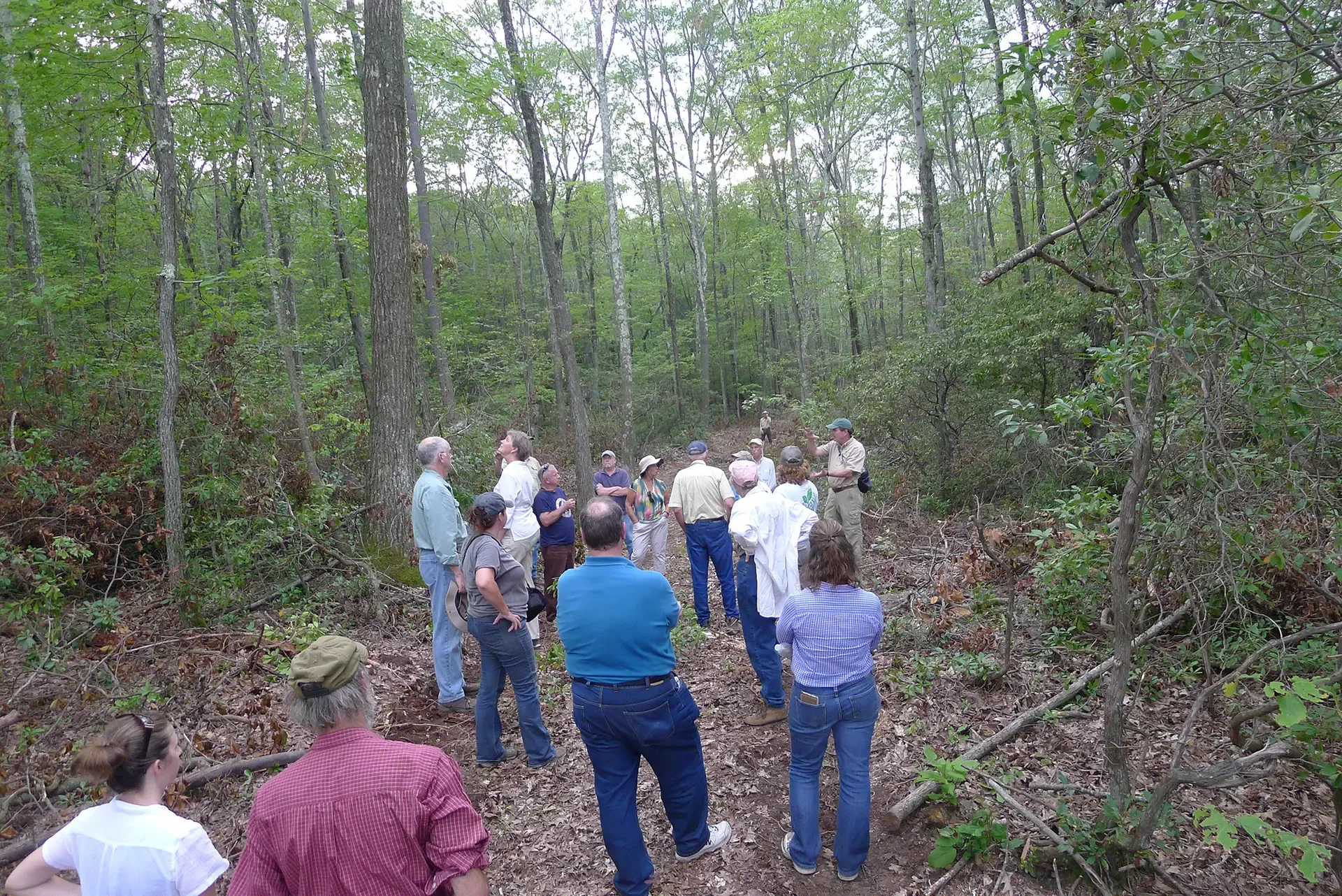
Beginning in 2013, the American Forest Foundation formed a partnership, the My MassConn Woods project, with the MassConn Sustainable Forest Partnership and the New England Forestry Foundation to work together to engage landowners in active forest management in the region that borders the Massachusetts and Connecticut to help improve overall forest health and wildlife habitat.
In 2016, the American Forest Foundation received a generous two-year grant from the Wildlife Conservation Society, enabling the partnership to be expanded. This included bringing on new partners including the Norcross Wildlife Sanctuary and the Northern Institute of Applied Climate Science, and expanding the work with landowners, to not only improve wildlife habitat today, but also in the future, by promoting climate resilience and adaptation throughout the full 38-town region.
Each partner brought different areas of expertise to the table, making the partnership extremely successful. AFF brought an understanding of landowner outreach strategies that could be used to reach woodland owners in this area and encourage them to become better stewards of their woods.
Since the partnership’s expansion, results have exploded. Over the past two years, the My MassConn Woods team has developed relationships with more than 245 landowners owning more than 13,000 acres, working with them to implement climate-informed management on their land. Specific highlights:
11 landowners have completed forest management activities to improve climate resiliency on more than 1,200 acres of land.
An additional 7 landowners, owning more than 500 acres have plans to complete forest management activities in early 2018.
41 landowners have met with a forester on their land to discuss options to create wildlife habitat and a more climate-resilient healthy forest.
140 landowners have attended a My MassConn Woods workshops or events.
Thanks to the incredible results in just two years, the New England Forestry Foundation recently received a grant from the Forest Service that will allow the My MassConn Woods team to continue working with landowners to adopt climate-informed management, as well as bring on more boots-on-the-ground resources. Through this grant, the team will train additional foresters in “climate-informed management” and connect more landowners with foresters who can provide guidance to increase climate resiliency throughout the landscape. In addition, the Connecticut Department of Energy & Environmental Protection and Massachusetts Department of Conservation & Recreation have joined the partnership as key trusted local partners.
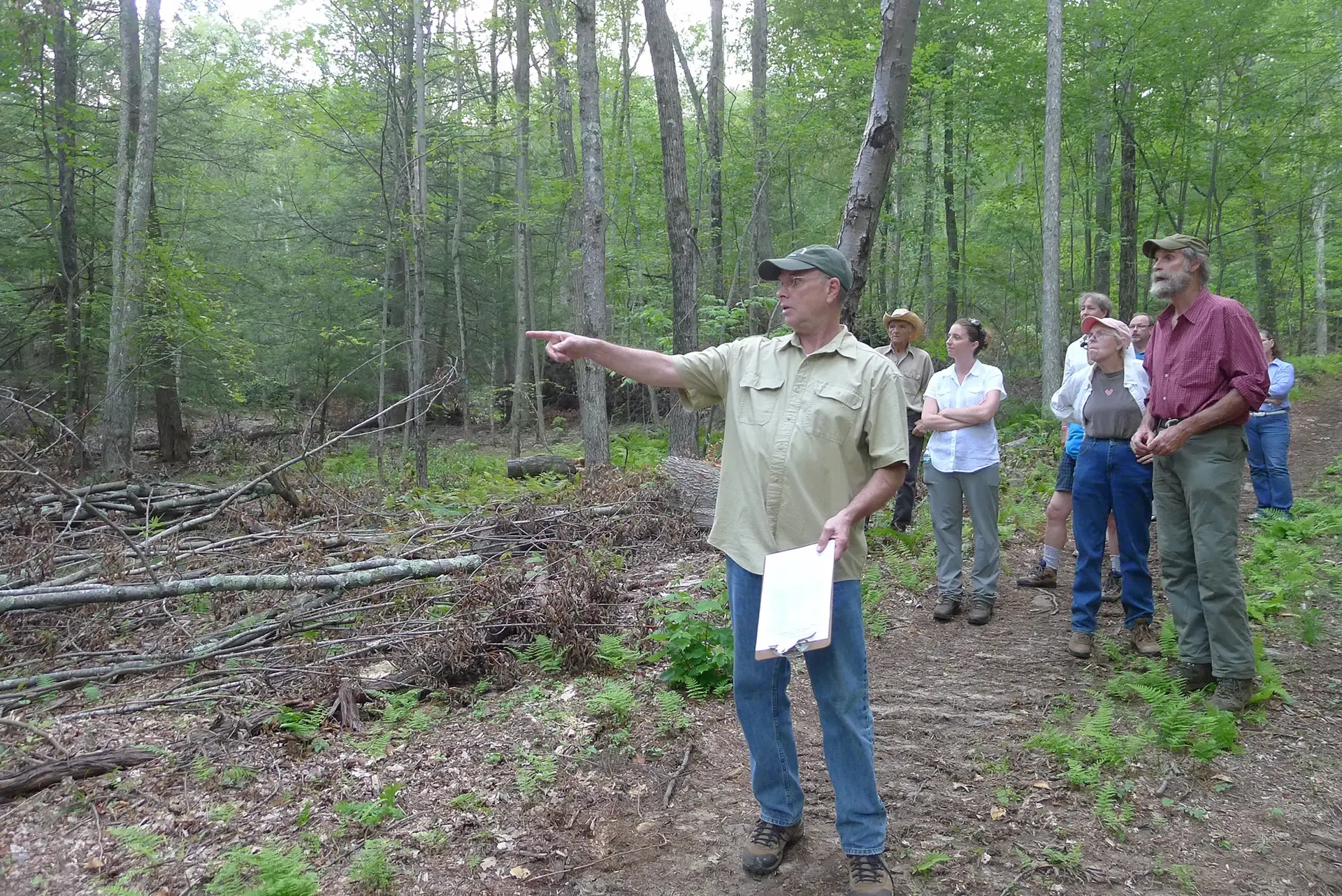
If you're nterested in learning more about the project or the materials that have motivated landowners to care for their land amid changing conditions, check out the My MassConn Woods new video, or the program materials.
Related Articles
June 18, 2026
Federal Partnerships Fuel Growth for Family Forest Owners and the Forest Economy
The Family Forest Carbon Program doesn’t just create environmental benefits — it also helps strengthen the entire forest economy. Today, thanks to catalytic funding from key partners, FFCP has enrolled more than 200,000 acres, creating new educational and economic opportunities for landowners and foresters across the country.

May 28, 2026
Fighting Forest Invasives For A Healthier Future
Laura and Mike Jackson were among the first-ever landowners to enroll in the Family Forest Carbon Program (FFCP). As one of the 78 members of FFCP’s first cohort, they launched the program to become a current network of over 1,400 landowners stewarding over 200,000 acres of land across the Eastern United States. The Jacksons shared how the program has helped their forest goals these past 6 years.

May 13, 2026
Looking Back at Bear Town
FFCP caught up with Susan Benedict, our third-ever-enrolled landowner, to reflect on her six years with the program and what she is looking forward to in the future.