A Fresh Approach to Climate Action: Insights from Our Latest White Paper
Overview
Released today, the latest white paper from the American Forest Foundation, Boosting the Power of Corporate Investment in the Fight Against Climate Change, details how investing in forests, specifically family-owned forests in the United States, is a critical and currently underused tool in the fight against climate change, and how new innovative programs and financing models are necessary to build and scale a voluntary carbon market that maximizes its climate impact.
The Untapped Potential in American Forests
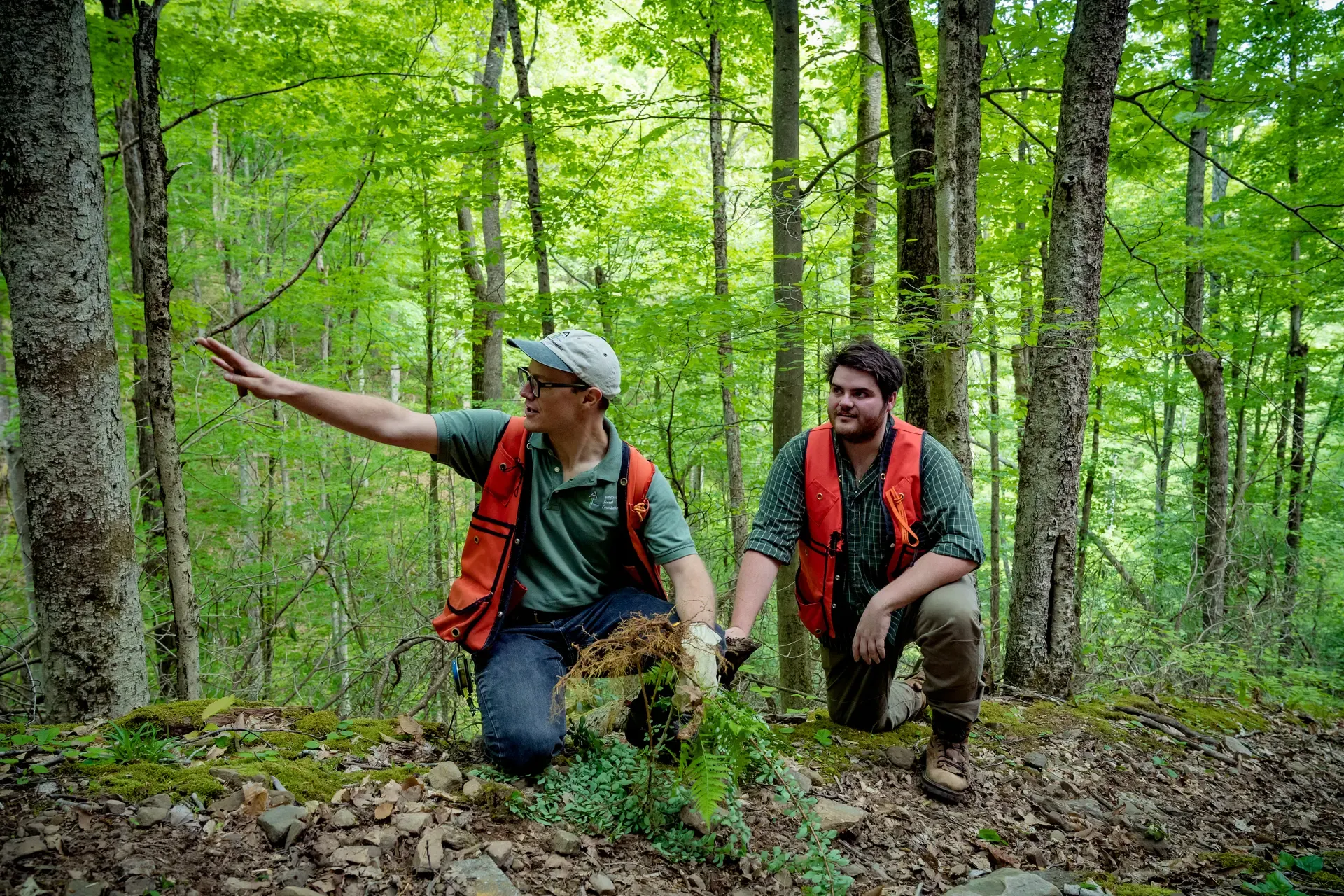
Throughout the American Forest Foundation’s 40+ years of existence as a nonprofit, we have centered American family forest owners in all our work. Family forest owners hold 39% of all forested land in the United States, which represents the largest portion of forested land in aggregate. As a result, this community is responsible for stewarding many of the natural resources that we enjoy across the nation.
For example, family forest owners safeguard the watersheds that provide clean drinking water to our local communities and wildlife. Their forests provide critical habitat for native and migratory species, and their trees provide timber for the towns and cities we build, and the wood products used in our everyday lives. And in the fight against climate change, they play an essential role in sequestering carbon and other greenhouse gases away from the atmosphere.
Forests are our best natural climate solution, but devastating impacts of climate change have put them at risk, and deep investments are needed to restore and improve their health and well-being.
The 3 Steps to High-Integrity Carbon Credits
Using the American Forest Foundation’s Family Forest Carbon Program as an example, Boosting the Power of Corporate Investment in the Fight Against Climate Change explains how high integrity in the design of forest carbon projects is needed to ensure that money being spent is truly making a positive impact on the climate and environment. Three elements are required: additionality, a dynamic baseline and permanence. Having these three elements builds higher trust in forest carbon projects and attracts the investment needed to scale the voluntary carbon market.
Dynamic baselines de-risk projects of non-additionality by using an actual, observed baseline rather than a projected baseline.
Additionality
To be additional, a difference must be shown between a project’s emissions reductions or removals compared to a business-as-usual baseline’s emissions reductions or removals within a project area. If the first condition is met, the project must identify what exactly caused the differentiation from that baseline.
Dynamic Baseline
Forests are inherently dynamic ecosystems that flux and flow in their carbon yield and storage. Older or legacy forest carbon projects calculated baselines by attempting to predict future deforestation based on the past, creating an additionality gap between real project performance and what was predicted. Dynamic baselines de-risk projects of non-additionality by using an actual, observed baseline rather than a projected baseline.
Permanence
Permanence is a critical attribute of ensuring a true carbon benefit — emissions must be permanently removed or reduced in order to reduce the carbon in our atmosphere, particularly if they will be used to offset emissions. The Family Forest Carbon Program ensures permanence through smart program design, a pooled buffer system, and long-term monitoring and engagement of enrolled properties.
The Power of Innovative Financing
Along with the scientific elements required to design high-integrity forest carbon projects, Boosting the Power of Corporate Investment in the Fight Against Climate Change details how new innovative financing models should be explored if the nature-based carbon market is to achieve both scale and quality. This includes exploring new contracting mechanisms and pooled philanthropic and grant funds as opportunities for credit enhancement.
How to Scale the Carbon Market
The time to grow and expand high-quality nature-based solutions like the Family Forest Carbon Program is now, and the private sector plays a vital role in catalyzing projects and scaling the voluntary carbon market.
Download the full white paper here to learn more about the climate opportunity in U.S. family forests and how innovative financing models can produce stronger collaborations between project developers and investors to increase the pace of developing high-quality and impactful programs.
Related Articles

July 14, 2026
Behind the Mission: Our Annual Team Retreat
Recently, the American Forest Foundation team came together for our annual retreat. This year, we spent a week in the beautiful rolling hills of Pennsylvania’s Lehigh Valley. Throughout the week, we participated in a variety of activities centered around sharing our specialized knowledge, what we’ve learned in the past year, and exploring how we can continue growing our impact.
June 18, 2026
Federal Partnerships Fuel Growth for Family Forest Owners and the Forest Economy
The Family Forest Carbon Program doesn’t just create environmental benefits — it also helps strengthen the entire forest economy. Today, thanks to catalytic funding from key partners, FFCP has enrolled more than 200,000 acres, creating new educational and economic opportunities for landowners and foresters across the country.

June 16, 2026
New Approach Could Help Solve One of Carbon Markets’ Biggest Problems
The American Forest Foundation, Beyond Alliance, and RMI today released findings that introduce a new legal and financial framework to manage risk for all carbon removal pathways that will bolster the integrity and scalability of the market.