Report: Southern Wildlife at Risk
Southern U.S. forests are among the most diverse, biologically productive temperate forests in the world. (Hanson et al., 2010) Nearly half of the 13-state southern region that stretches from Virginia to east Texas is carpeted in forests. From longleaf and loblolly pine forests on the Atlantic Coastal Plains to mixed pine and oak forests on the Cumberland Plateau to live oak forests and bottomland hardwood forests in the Gulf Coastal Plains, these diverse Southern forests host more wildlife than any other region of the country.
Unlike in the Western United States, however, where most forests are publicly owned, the vast majority of Southern forests are held privately. Nearly nine of every 10 acres is private, with the bulk of that — 134 million acres — owned by an estimated 1.8 million families or individuals. (Butler et al., 2016) That means family forest owners play a vitally important role in protecting wildlife habitat, meeting demand for wood products, and maintaining overall forest health across the South.
type: asset-hyperlink id: FOCzssU92MjeB89NqViRh
All 13 Southern states rank in the top 23 nationally for the total number of wildlife species within their respective borders. (NatureServe, 2002) Yet, many of these species are declining and at risk. Over the past 150 years, a compounding of events has changed the landscape. From conversion of forests to non-forest uses, to fragmented waterways, fire suppression, and an influx of invasive species, both wildlife and its habitat have suffered throughout the region. (Griep and Collins, 2013)
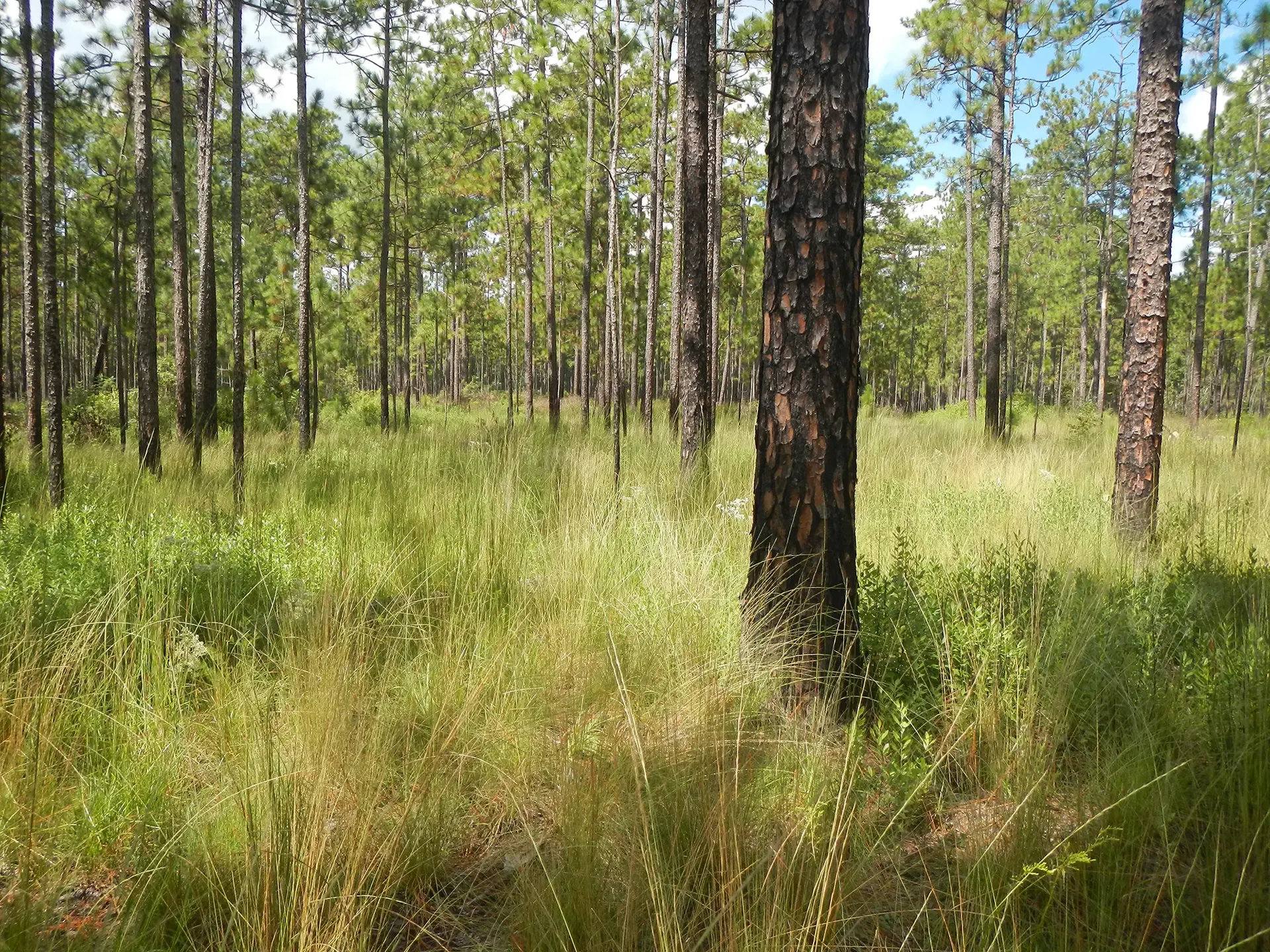
In fact, type: asset-hyperlink id: FOCzssU92MjeB89NqViRh found that there are 622 at-risk wildlife species in the South, 517 of which are forest-dependent. Moreover, 224 of those forest-dependent species have already been listed as threatened or endangered under the Endangered Species Act, including the red-cockaded woodpecker and the reticulated flatwoods salamander. Another 293, such as the golden-winged warbler, and Alabama map turtle, are under review as candidate species or through a petition process and could be listed in the future.
Southern forests are not just rich in wildlife. The region is also known as America’s wood basket because it produces 57% of the nation’s wood. These forests are an economic engine that support 1.1 million jobs and contribute more than $230 billion to the region’s economy, much of that economic output comes from family-owned forests. (Southern Group of State Foresters, 2013) Additionally, there is a growing demand for sustainably-produced wood products from consumers who recognize the value in ensuring forests continue to provide clean water, wildlife habitat, recreation space and other important benefits, both now and long into the future.
Because family landowners own nearly 60% of Southern forests, they can — and must —play a key role in that effort. In order to find out how and where to best engage those landowners, AFF commissioned a survey that received responses from more than 1,400 Southern family landowners on their attitudes and activities related to wildlife and wood products. AFF also conducted a first-of-its-kind spatial analysis to find out where working with family landowners could be most effective at protecting at-risk wildlife and promoting sustainable wood supplies.
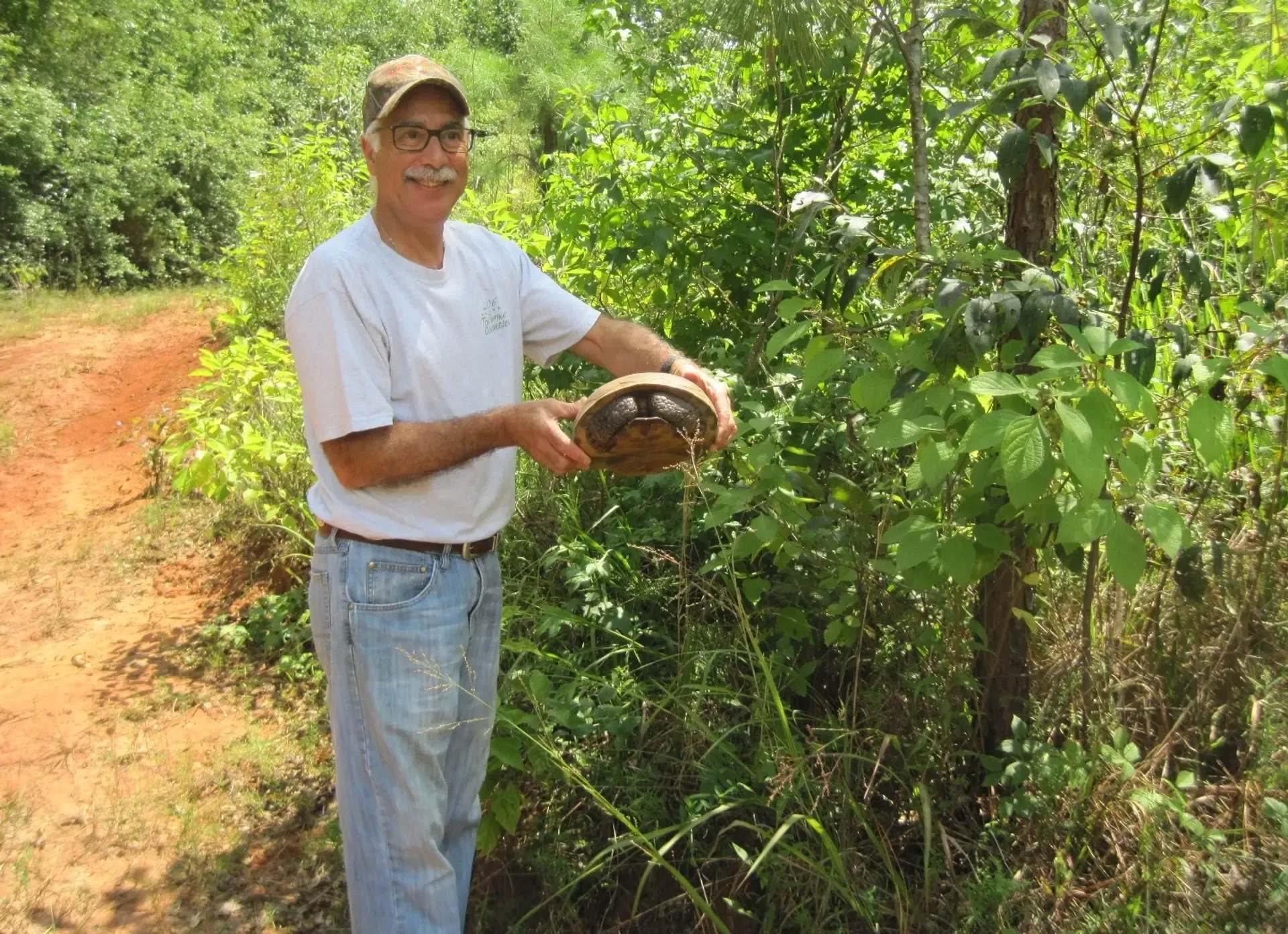
Salem Saloom (AL, landowner) with a gopher tortoise.
type: asset-hyperlink id: FOCzssU92MjeB89NqViRh confirmed that Southern family landowners are primarily interested in managing their woods for wildlife habitat and that nearly three-quarters of them have implemented at least one wildlife improvement activity. What’s more, 73% are willing or considering conducting at least one practice for wildlife in the future. In addition, nearly two-thirds say they are willing to harvest timber if it will benefit wildlife, and 85% of those who have harvested have also taken other steps to improve wildlife habitat, such as planting native trees, restoring areas along streams, or removing invasive species.
However, most landowners are not actively managing their forests on an ongoing basis and acknowledge that there is more that they could do to protect and enhance wildlife habitat. They say that the biggest barriers to doing more are uncertainty about what to do and a lack of financial resources to get it done.
The gap between what family forest landowners are currently doing for wildlife, and what they want to do, provides an opportunity for outreach and engagement to get them the information and resources they need to protect wildlife while producing sustainable wood.
Knowing what family landowners want and need, is just one part of the equation. In order to effectively engage those landowners and help meet their needs, we have to know where the most important wildlife habitat and wood baskets overlap. AFF’s spatial analysis identified 183 priority counties that have a high proportion of family forest owners, substantial wildlife resources, including many at-risk species, an active wood products industry, and projected growth in demand for wood supplies. Together, these counties encompass more than 35 million acres of family forests — just over one-fourth of the total family forest acreage in the South — owned by an estimated 438,000 family landowners.
type: asset-hyperlink id: FOCzssU92MjeB89NqViRh, AFF identified three concentrated opportunity areas— Atlantic Coastal Plains, Cumberland Plateau, and Gulf Coastal Plains —where outreach to family forest owners would have the greatest potential to protect habitat for at-risk wildlife while helping to meet U.S. and global demand for sustainably-produced wood supplies.
Based on this, three important strategies are recommended that will both improve wildlife habitat and provide sustainable wood supplies from family forest lands:
Develop, invest in, and implement landscape-scale landowner outreach and engagement, focused in the three Opportunity Areas, to provide educational, technical, and financial support for practices that improve at-risk wildlife habitat and produce sustainable wood supplies.
Promote forest product purchasing that supports sustainable management of Southern family forests.
Provide funding and policy tools that support family forest landowner engagement, promote markets for sustainably-produced wood products, and encourage voluntary at-risk wildlife conservation efforts.
Together, the spatial analysis and landowner survey show that protecting at-risk wildlife and providing sustainable wood supplies, can go hand-in-hand, with family landowners playing a central role.
type: asset-hyperlink id: FOCzssU92MjeB89NqViRh
Related Articles

September 14, 2026
New Report: Family Forests Provide Millions in Benefits to Businesses and Communities
Today, the American Forest Foundation (AFF) and Sorenson Impact Institute (SII) announced that forests managed by AFF’s Family Forest Carbon Program (FFCP) can provide millions in direct benefits and cost savings to businesses and communities.
September 9, 2026
Is FFCP Right For You? Part 3: You're Concerned About Greenwashing
This idea of “greenwashing’ is a real concern, and one we share as individuals who care deeply about the earth and America’s forests. In this article we’ll look at how we know we are selling real, high-quality, verified carbon credits and how carbon markets—while not a perfect solution to climate change—allow us to do more with fewer resources.

September 9, 2026
Is FFCP Right For You? Part 4: You Want to Know You're Getting a Good Deal
We know that money probably isn't the top priority when it comes to your forest, but it’s still important. If you’re like most landowners, you want to know that whatever you implement is going to be financially possible for you and your family, and that you’re not making an outright poor financial decision. In this article we’ll look at how the Family Forest Carbon Program (FFCP) is designed to protect you from market risk while increasing the long-term value of your forest.